
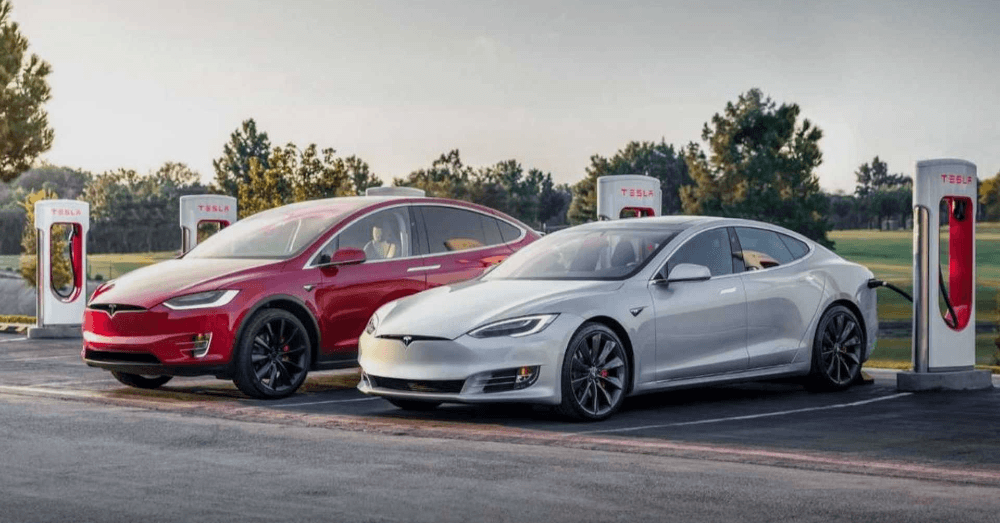
Tesla has officially stopped taking new orders for the Model S sedan and Model X SUV, closing one of the most storied chapters in electric vehicle history. Elon Musk confirmed on X that custom orders for both vehicles have ended, with only a limited number of inventory units still available. He also teased plans for a ceremony to mark the occasion, posting a throwback photo from the Model S production launch in 2012.
- The option to configure and order a new Model S or X has been removed from Tesla’s website, with customers instead directed to purchase from a limited supply of pre-configured vehicles in Tesla’s inventory.
- Musk stated that Tesla will convert the Model S and Model X production space into an Optimus factory as part of its shift toward an autonomous future.
- In 2025, the Model S recorded just 5,889 unit sales, down 52.6% from 2024, while the Model X managed 13,066 units, a 34.2% drop from the prior year.
Two Cars That Changed Everything
The Model S first went on sale nearly fifteen years ago and was Tesla’s first fully in-house designed vehicle, proving that an electric car could be fast, desirable, and capable of covering long distances on a single charge. Before it arrived, Tesla was known only for a low-volume Lotus-based Roadster. The Model S was a full-size luxury sedan that Tesla designed and built from scratch, and it dominated the EV market for years.
The Model X followed in 2015, turning heads with its eye-catching falcon-wing doors while becoming one of the first all-electric SUVs on the market. Together, these two vehicles proved that EVs could go toe-to-toe with anything from BMW, Mercedes, or Porsche. Tesla’s two flagship vehicles pushed legacy automakers to take all-electric transportation seriously and helped fund development of the more affordable Model 3 and Model Y.
The Model S introduced the world to the North American Charging System (NACS) connector that has quickly become the industry standard, and its Plaid variant showed the performance ceiling of EVs with a near sub-2-second zero-to-60 mph time. Those are accomplishments worth celebrating.
Why Sales Fell Off a Cliff
You could see this coming for a while. The Model S is now 13 years old, while the Model X entered its 11th year in production. The EV market moved fast, competitors caught up, and Tesla’s attention shifted to higher-volume models. Lucid Air has now surpassed Model S in desirability for many luxury EV buyers, and the Rivian R1S outcompetes Model X in the electric SUV space.
Tesla’s “other models” category generated only 12,881 unit deliveries in Q4, compared to Model 3/Y deliveries of 323,800. According to the Kelley Blue Book Electric Vehicle Sales Report, Model S and X totaled just over 4,000, representing 1.2% of deliveries in the quarter. That’s a staggering drop for vehicles that once topped owner satisfaction surveys.
Just seven months before the discontinuation announcement, Tesla launched an updated Model S and Model X that amounted to very mild changes. The biggest update was a $5,000 price increase, pushing the Model S to $84,990 and the Model X to $89,990. That didn’t exactly inspire a wave of new buyers.
Robots Will Take Their Place on the Factory Floor
Elon Musk hints at official ceremony plans to close the Tesla Model S and Model X chapter, but he’s already looking ahead. Musk said on the Q4 earnings call that Tesla is replacing its production line for S and X in Fremont with a 1 million unit per year line of Optimus.
The move frees factory floor space at Fremont, California, for new manufacturing programs, including Optimus humanoid robots and the upcoming Robotaxi platform. Tesla’s ambitions have clearly moved well past building cars. Musk has said the company is unlikely to make any more conventional non-autonomous vehicles in the future, with the exception of the long-awaited Roadster, which is set to be unveiled in April.
Tesla is preparing to begin production of its two-seater Cybercab robotaxi, which does not have a steering wheel or pedals, this month. That’s a wild shift from the luxury sedan and SUV that got this whole thing started. Meanwhile, Tesla’s energy storage business generated a record gross revenue of $12.8 billion in 2025, a 26.6% year-over-year increase.
What Current Owners Can Expect
If you already own a Model S or Model X, Tesla hasn’t forgotten about you. Tesla will continue to support current Model S and Model X owners with any servicing needs. The company expects to provide ongoing service, parts availability, and software updates, though it has not disclosed how long full support will remain in place.
For anyone eyeing one last purchase, Tesla’s website redirects users to the inventory page, with 15 Model S units and 24 Model X’s waiting for customers. All inventory cars feature free DC fast charging at Tesla’s Superchargers and free lifetime Premium Connectivity, which includes satellite-view maps, weather forecasts, Sentry Mode, and music and video streaming. Once they’re gone, they’re gone.
A Fitting Send-Off for the Cars That Started It All
Love or hate the direction Tesla is heading, the Model S and Model X left a mark that’s tough to argue with. They turned a quirky startup into a global force and made every major automaker rethink their EV strategy. They proved EVs could be exciting and desirable on their own terms. They won over early adopters, converted skeptics, and showed legacy automakers that they needed to take electric vehicles seriously.
Now Musk plans an official ceremony to give them a proper farewell. Whatever that looks like, these two vehicles earned it. The factory floor that once built them will soon be turning out humanoid robots, and Tesla’s story keeps writing itself in directions few people imagined even a decade ago.
