
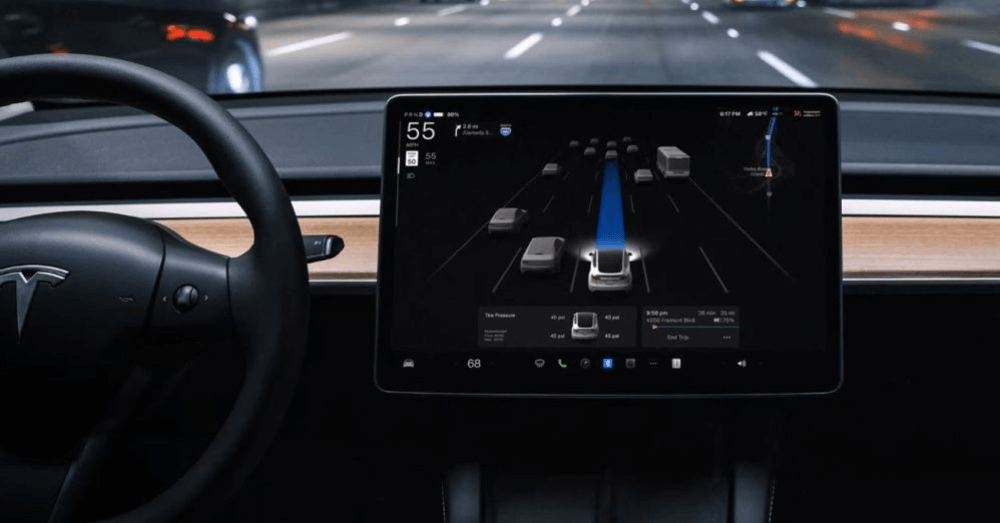
Tesla just dropped two major announcements that will change how drivers access the company’s self-driving technology. Starting February 14, 2026, Full Self-Driving will become a subscription-only feature, and the beloved Autopilot package is officially being discontinued. These changes mark a major pivot in Tesla’s approach to driver assistance technology.
- Tesla’s Full Self-Driving package will transition exclusively to a subscription model starting February 14, 2026, eliminating the one-time $8,000 purchase option and pushing customers toward a recurring $99 monthly fee.
- Elon Musk has confirmed that the current $99-per-month price for supervised FSD will increase over time as the system’s capabilities improve.
- Tesla has discontinued Autopilot, its basic driver-assistance system, as the company pushes adoption of Full Self-Driving (Supervised).
Why Tesla Is Ditching Outright FSD Purchases
Musk and other Tesla executives have spoken publicly about how FSD adoption rates have been lower than they hoped. In October 2025, chief financial officer Vaibhav Taneja said only 12% of all Tesla customers have paid for FSD. That’s a surprisingly small slice of the Tesla fleet, and the company clearly wants to change that.
Shifting to a subscription-only model with a lower upfront cost could help boost those numbers, especially during a first quarter expected to be rough for Tesla. Boosting subscriptions would also get Musk closer to fulfilling one of the key “product goals” required for him to receive the full payout of his new $1 trillion pay package. The company has tasked him with reaching “10 million active FSD subscriptions” before late 2035.
FSD is also a tough sell at its current price of $8,000. It would take 80 months to break even with the monthly subscription, and new car buyers may churn through vehicles much more quickly than that. Paying month-to-month might actually make sense for many drivers.
Autopilot’s Surprising Exit
The bigger surprise? Tesla removed its basic Autopilot package as a standard feature in the United States. The move leaves only Traffic Aware Cruise Control as standard equipment on new Tesla orders, shifting the company’s strategy towards paid Full Self-Driving subscriptions.
Previously, most Tesla vehicles came with Autopilot by default, which offers Traffic-Aware Cruise Control and Autosteer. The change resulted in backlash from some Tesla owners and EV observers, particularly as competing automakers, including mainstream players like Toyota, offer features like lane-centering as standard on many models, including budget vehicles.
Removing lane-centering really does put Tesla behind the pack. Even Toyota’s sub-$25,000 base-trimmed Corolla LE has lane centering in 2026. That’s not a great look for a company that built its reputation on being the tech leader.
California’s Legal Pressure Plays a Role
The decision comes as the company faces a 30-day suspension of its manufacturing and dealer licenses in its largest U.S. market, California. A judge ruled in December that Tesla engaged in deceptive marketing by overstating the capabilities of Autopilot and FSD for years. The California DMV, which originally brought the case, stayed the ruling for 60 days to allow Tesla to comply by dropping the Autopilot name.
A California judge put the kibosh on Tesla’s false advertising of these features, ruling that the company deceptively marketed both of them and stating that it must stop doing so within 60 days. That decision was on December 17th, to go into effect on February 14, 2026. The timing here feels too coincidental to ignore.
Future Price Increases Are Coming
Musk stated that the current $99/month for supervised FSD will rise as FSD’s capabilities improve. The massive value jump is when you can be on your phone or sleeping for the entire ride (unsupervised FSD). So expect the subscription cost to climb as Tesla continues developing the technology.
The electric vehicle maker is not averse to fiddling with price lists; the FSD feature reached a high of $15,000 in September 2022 before being reduced to $8,000 in 2024. If history tells us anything, Tesla has no problem adjusting prices to match what they think the market will bear.
What Tesla Owners Should Consider Now
If you already purchased FSD before this deadline, good news: your purchase remains permanently valid. But for everyone else, the math gets interesting. With the switch to subscription only, the cost becomes unlimited over the vehicle’s ownership period. Over 10 years of use, we’re talking about a total of $11,880, which is almost $4,000 more than the current one-time purchase.
The shift to a subscription-only model eliminates uncertainty about transferring software between vehicles entirely. By treating FSD as a service rather than a product, the concept of “transferring” the software becomes moot. That’s actually a relief for drivers who’ve felt burned by Tesla’s restrictive transfer policies in the past.
The Tesla FSD subscription price changes mark a turning point in how the company sells its technology. Whether this strategy succeeds depends on how drivers respond, but the days of paying once and owning forever are coming to an end.
