Kia’s PV7 Electric Van Goes Big on Space and Range
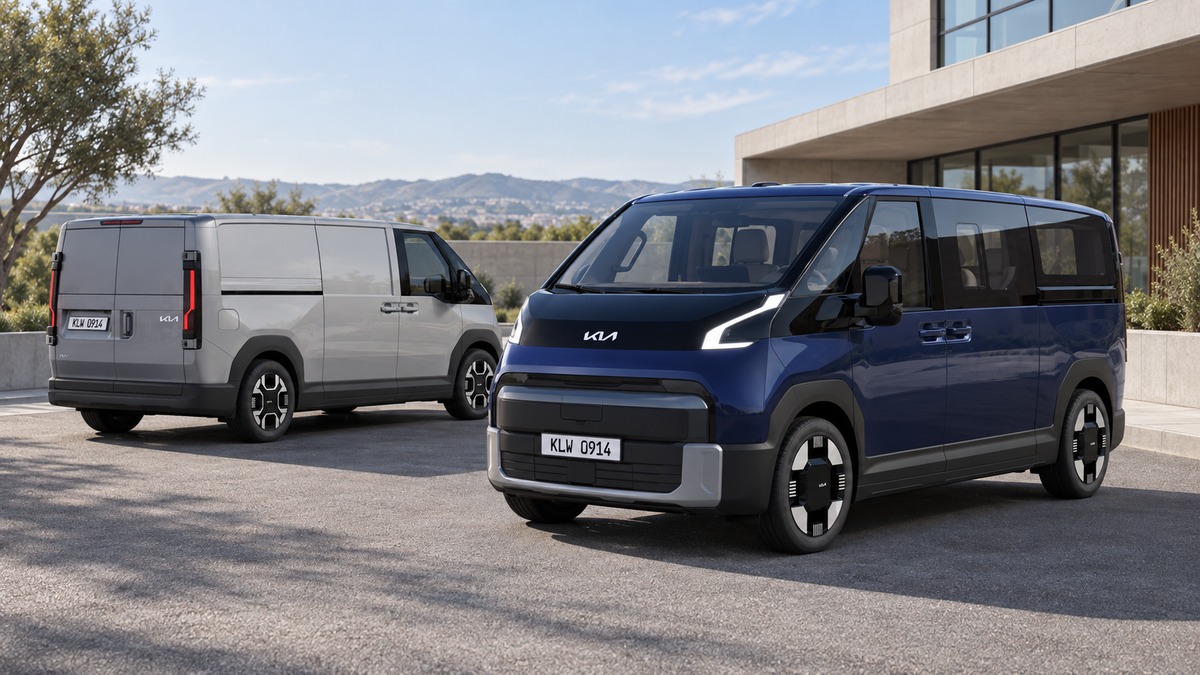
Kia just pulled the wraps off the PV7, a larger electric van built to sit above the PV5 and take on the commercial world. It brings Cargo and Passenger versions, with sales planned for 2027.
- The PV7 offers up to 285 miles of range on Europe’s WLTP cycle and as much as 268 horsepower.
- Buyers can pick Cargo or Passenger versions, with seating for up to nine, or eleven in Korea.
- Sales start in South Korea and Europe in 2027, with U.S. plans still unconfirmed.
A Bigger Van Joins the Family
Kia showed the PV7 at the IAA Transportation 2026 show in Hannover, Germany, and it’s the second model in the company’s Platform Beyond Vehicle lineup. Think of it as the roomier follow-up to the PV5, the electric van that launched in 2025 and kicked off Kia’s push into commercial EVs. When the Korean automaker first laid out these plans back at CES 2024, it teased a larger van. The PV7 is that promise made real.
Like its smaller sibling, the PV7 rides on the E-GMP.S platform and comes only as an electric vehicle. That architecture gives it a flat floor, which frees up interior space and makes the cabin easier to load and move around in. It also gives Kia room to grow the family, since the same underpinnings can support a long list of body styles down the road.
Power, Range, and Charging
Buyers get a choice of two batteries, either a 72-kWh or a 96-kWh pack, both using nickel-cobalt-manganese chemistry. Early models arrive with front-wheel drive, and Kia says all-wheel drive is coming later. Output tops out at 268 horsepower and 309 pound-feet of torque, though the exact figures shift depending on the market and configuration you choose.
The headline number is range. Kia says the Long Range Cargo version can cover 285 miles on Europe’s WLTP test cycle. That is a WLTP figure, not an EPA rating. It applies to the Long Range Cargo version rather than every PV7 configuration.
Charging looks quick too. An 800-volt setup lets the PV7 go from 10 to 80 percent in around 25 minutes on a DC fast charger. There are two charging ports, a front AC/DC port and an optional rear AC port. The van also supports vehicle-to-load, so drivers can run power tools and other gear straight off the battery. For anyone using the PV7 as a rolling worksite, that’s a genuinely handy feature.
Cargo Space and Cabin Tech
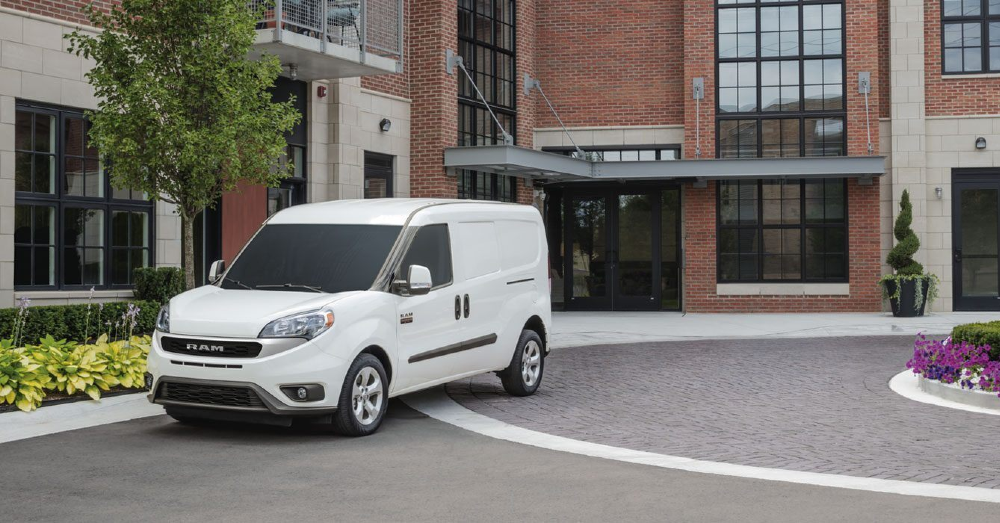
The PV7 Cargo comes in two- and three-seat setups and stretches 210.6 inches in the Long configuration. That’s roughly the length of the 2027 Ram ProMaster City, though the Kia is a bit wider and taller. The Cargo Long holds up to 215 cubic feet of gear, and the Cargo High Roof bumps that to 282 cubic feet. Payload maxes out at 2,568 pounds on the Long model, and there’s a dedicated heavy-load drive mode plus a choice between twin-swing or lift-up tailgates.
The Passenger version shares those dimensions but seats nine, or eleven in Korea. Inside, the layout stays clean and practical. A 14.6-inch touchscreen sits on the dash next to a slim digital gauge cluster, and Kia kept plenty of physical buttons, including a row of climate toggles. The van runs the new Pleos Connect system built on Android Automotive OS, complete with an app marketplace and a voice assistant called Gleo AI that handles navigation, messaging, and vehicle functions.
Fleet operators get their own toolkit. The Kia Business Solutions Portal helps managers stay on top of charging, maintenance, and daily operations, while the Uptime services lean on real-time monitoring and predictive diagnostics to keep vans on the road.
What Comes Next for Kia’s Van Push
Kia plans to build the PV7 alongside the PV5 at its factory in Hwaseong, South Korea. Sales begin in South Korea and Europe in 2027, with other markets to follow. U.S. timing hasn’t been confirmed yet, so shoppers on this side of the Atlantic will have to wait for word. Down the line, Kia wants to grow the PV7 range to 23 variants, including Compact Cargo and Passenger models, a Chassis Cab, and various conversions. An even bigger PV9 is slated for 2029, which suggests Kia is playing a long game in the electric van space.
This post may contain affiliate links. Meaning a commission is given should you decide to make a purchase through these links, at no cost to you. All products shown are researched and tested to give an accurate review for you.