Why Toyota Built Its Own Game Engine for Your Car’s Dashboard
A carmaker building a game engine sounds like the start of a joke, but Toyota is dead serious. The company’s tech subsidiary, Toyota Connected North America, just revealed Fluorite, an open-source game engine built from the ground up for in-vehicle displays. It was announced at the FOSDEM 2026 conference in Brussels, and it’s already turning heads across both the auto and gaming worlds.
- Toyota Connected developers announced Fluorite at FOSDEM 2026 as a “console grade” engine built around Flutter and Dart.
- Options like Unity and Unreal Engine were rejected due to proprietary blobs, resource weight, and licensing fees.
- While Fluorite’s main purpose is to power Toyota’s in-vehicle 3D displays, its open-source license could open the door to regular game development.
What Is Fluorite and Why Does It Exist?
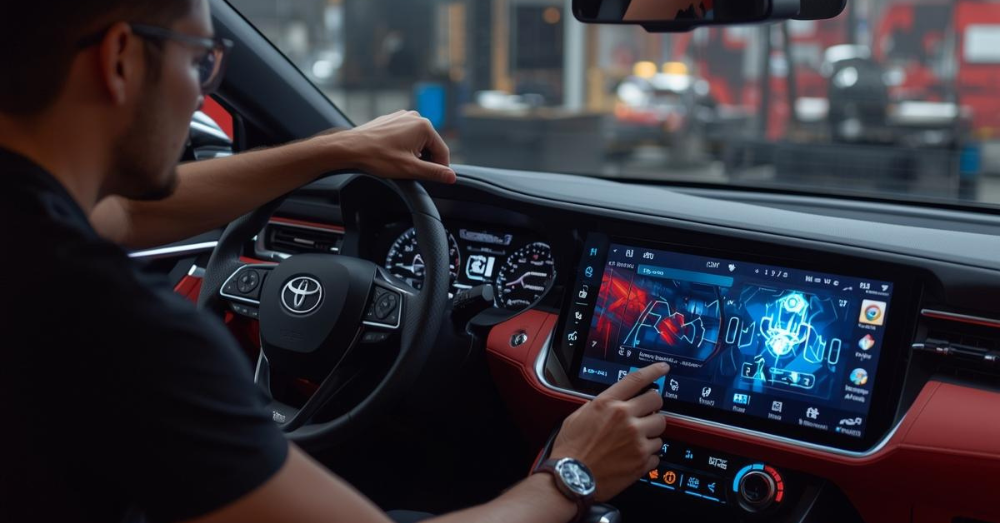
If you’ve ever used a touchscreen in a newer Toyota, you’ve already interacted with the kind of tech Fluorite is being built for. Fluorite was developed to provide in-car 3D tutorials, environment mapping, and more natural interfaces. Think of it as the brains behind the next generation of Toyota’s digital cockpits, the screens and controls you see on the dashboard.
Toyota Connected North America is Toyota Motor Corporation’s subsidiary, founded in collaboration with Microsoft to work on in-vehicle software, AI, and related tech. The team is based in Plano, Texas, and they’re the ones who brought Fluorite to life.
So why build an entire game engine instead of just using one that already exists? Toyota says the project started as an attempt to build 3D user interfaces for future vehicles, but the team looked at established engines like Unity and found them too heavy for embedded automotive systems. Licensing costs were also a concern. In the end, building a lightweight, in-house solution made more sense.
Why Unity, Unreal, and Godot Didn’t Make the Cut
Toyota didn’t jump into this blindly. The development team evaluated several popular game engines before deciding to roll their own. Unity and Unreal Engine were ruled out due to proprietary blobs, resource weight, and licensing fees. Godot was found to have long start-up times and to be too resource heavy. Other options were unstable or lacked a reliable API.
Car infotainment systems don’t have the processing muscle of a PlayStation or gaming PC. Fluorite is designed specifically for automotive systems, where hardware is often less powerful than a typical smartphone or laptop. That’s a huge constraint, and it’s one that mainstream game engines aren’t really built to handle.
Under the Hood of Fluorite
Fluorite is written in C++ and works closely with Google’s cross-platform UI framework, Flutter. Developers can write game logic and interface code in Dart, Flutter’s programming language, which lowers the barrier to entry for anyone already familiar with app development.
Positioned as the first console-grade engine fully integrated with Flutter, Fluorite uses hardware-accelerated graphics via Vulkan, alongside physically based rendering, accurate lighting, post-processing effects, custom shaders, and multiple simultaneous 3D scene views. That’s a pretty impressive spec sheet for something designed to run on car dashboard hardware.
Fluorite also uses Google’s Filament 3D rendering engine, and the team plans to integrate Jolt Physics down the line. There are some practical perks for developers, too. Fluorite supports a hot reload system similar to Flutter, letting developers see changes within a few frames instead of waiting through long build times. The engine also supports model-based trigger areas, so artists can define touch or click interactions directly inside tools like Blender.
Toyota’s in-vehicle home screen already has an embedded Flutter run-time with Yocto Linux and Wayland, and that setup is used in production on vehicles like the 2026 Toyota RAV4. Fluorite builds on that existing foundation.
Could Fluorite Show Up Outside of Cars?
While initially targeted at automotive displays, the platform could eventually extend to consoles like Xbox or PlayStation. That’s a bold claim for an engine born from an auto company, but the open-source license makes it possible. Toyota is marketing Fluorite as a fully featured open-source engine. Even if Toyota itself won’t make games, the license means independent, and enthusiast developers can pick it up and run with it.
Fluorite is still in its early developmental phase, and the team is looking for partners from other engineering groups to help build it out. You can find early details at fluorite.game, though much of the content is still listed as “coming soon.”
People already trust Toyota for building cars that last, and the Toyota Warranty backs that up. Now the company is putting that same long-term thinking into its software, choosing to build its own tools rather than depend on third parties.
Where Cars and Gaming Are Headed Together
Toyota isn’t alone in blending game tech with the driving experience. Tesla is quietly overhauling its Autopilot and Full Self-Driving visualizations with a switch to Epic Games’ Unreal Engine. Automakers across the board are hiring game designers, and engines like Unreal and Unity already show up in vehicle interfaces, marketing, and design visualization. The difference? Toyota wants to own its tech stack, not rent it.
Whether Fluorite becomes the “Corolla of game engines,” as one commenter joked, remains to be seen. But it’s a smart bet from a company that’s never been afraid to play the long game. If the engine matures and gains traction, it could give indie developers and smaller automakers a free, capable tool that doesn’t come with the licensing baggage of the big names. And for Toyota drivers, it could mean slicker, faster, and more interactive screens every time they climb behind the wheel.
This post may contain affiliate links. Meaning a commission is given should you decide to make a purchase through these links, at no cost to you. All products shown are researched and tested to give an accurate review for you.