2027 Hyundai Kona Changes Shoppers Should Know
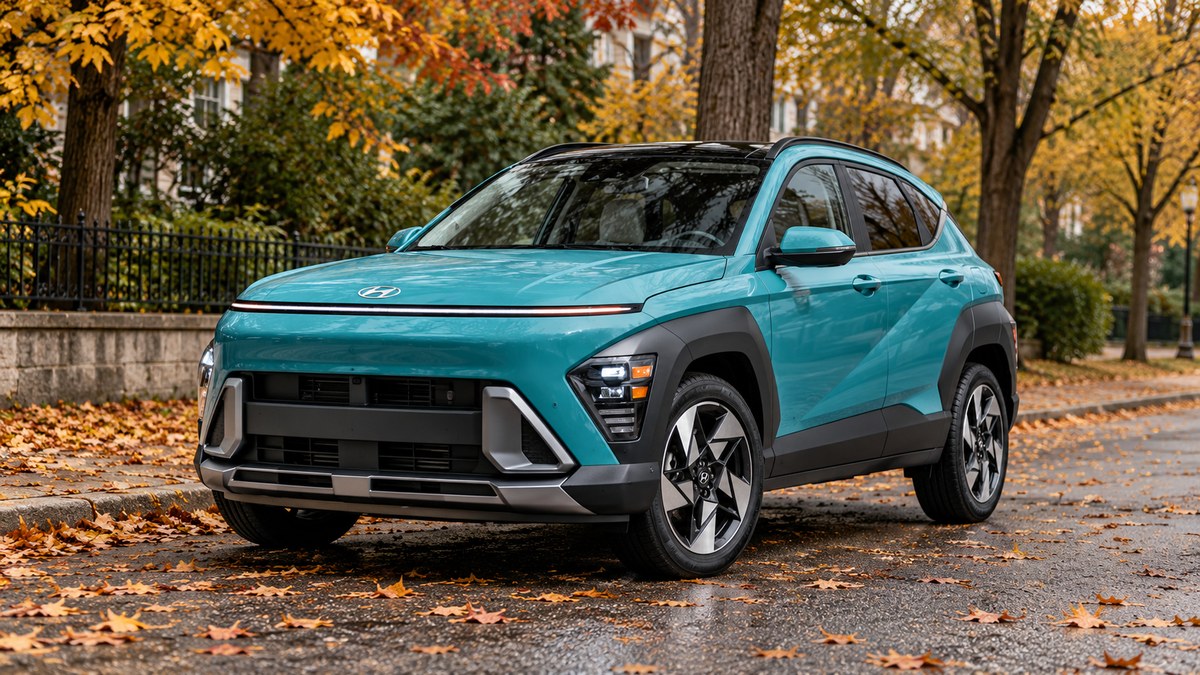
Hyundai didn’t reinvent its smallest gas SUV for 2027. The Kona keeps its look, its two engines and its four trims. Two small equipment changes could still surprise you if a 2026 and a 2027 end up parked side by side on your shopping list.
- The 2027 Kona SE drops Idle Stop and Go, Hyundai’s automatic engine stop-start system.
- Ambient lighting is now offered only on the Limited. It used to come on the SEL Premium and higher trims.
- Engines, fuel economy and cabin space carry over, and prices start at $25,500 before freight and fees.
Two Features Shift for 2027
Hyundai’s 2027 change list for the gas Kona is short. The first item affects the entry SE trim, which loses Idle Stop and Go. That’s the system that shuts the engine off when you come to a stop and restarts it when it’s time to move. Hyundai lists this deletion for the SE only, so don’t assume every 2027 Kona lost it.
Some people will barely notice. Some drivers would rather switch stop-start off anyway, so they won’t miss it at all. It’s also the cheapest Kona, so the trim without the feature is the one with the lowest price.
The second change is about cabin lighting. Ambient lighting used to be available on the SEL Premium and above. For 2027, only the Limited gets it. If you liked that soft glow on last year’s SEL Premium, you’ll now pay for the top trim to keep it.
Hyundai hasn’t said why it made either cut. Both changes apply to the gas Kona. There’s no confirmed matching update for the U.S. Kona Electric.
The Rest of the Kona Carries Over
Everything else stays put. The SE and SEL Sport use a 2.0-liter four-cylinder with 147 horsepower and 132 pound-feet of torque, paired with Hyundai’s Intelligent Variable Transmission, a type of CVT. The SEL Premium and Limited step up to a 1.6-liter turbo four with 190 horsepower and 195 pound-feet, and they use an eight-speed automatic.
Front-wheel drive is standard, and HTRAC all-wheel drive is an option on all four trims. That makes eight possible setups. You can get AWD without paying for the turbo, or take the turbo and stick with front-wheel drive.
The EPA rates front-drive 2.0-liter models at 31 mpg combined and AWD versions at 27 mpg. Turbo models land at 28 mpg combined with front-wheel drive and 26 mpg with AWD. The most efficient version hits 35 mpg on the highway.
Inside, the Kona still seats five and offers 38.2 inches of rear legroom. Cargo space measures 25.5 cubic feet behind the back seats and 63.7 cubic feet with them folded. Every trim gets a 12.3-inch touchscreen plus wireless Apple CarPlay and Android Auto. The SEL Sport adds 18-inch black wheels and a wireless phone charger. The SEL Premium brings the turbo, 19-inch wheels and H-Tex upholstery. The Limited adds a hands-free smart liftgate, Surround View Monitor and Blind-Spot View Monitor.
Hyundai lists starting prices of $25,500 for the SE, $26,825 for the SEL Sport, $28,425 for the SEL Premium and $32,535 for the Limited. Freight, taxes, fees and options cost extra. The $1,600 jump from SEL Sport to SEL Premium buys the stronger engine and more equipment, so that middle pair deserves a close look.
How to Compare a 2026 and a 2027
The equipment shuffle matters most when you’re weighing one model year against the other. A 2026 SEL Premium and a 2027 SEL Premium look nearly identical, but only the older one has ambient lighting. The same logic works in reverse for the SE. A 2026 SE still has stop-start, and the 2027 doesn’t.
That’s why it pays to read the equipment list instead of trusting the badge. If you’re comparing a used Hyundai Kona from 2026 with a new 2027, decide first which of these two features you actually care about. One driver might happily skip the lighting to save money. Another might pick the newer SE just because it won’t shut off at every red light.
Timing is worth a thought too. A redesigned, third-generation Kona is on the way, but it won’t arrive for the 2027 model year. So the current design is the one you’ll be choosing from for now, and it’s still a solid pick among small SUVs.
Check the Equipment List Before You Choose a Year
The 2027 Kona is a carryover with two small cuts, and neither one is a deal breaker. If stop-start bugs you, the new SE is now the easy answer. If you want ambient lighting, you’ll need a Limited or a 2026 SEL Premium. Look past the model year and check what’s actually on the car, and you’ll end up with the Kona that fits how you drive.
This post may contain affiliate links. Meaning a commission is given should you decide to make a purchase through these links, at no cost to you. All products shown are researched and tested to give an accurate review for you.